Published cartoon ·
Accountability without authority
Workplace satire from RealityBytesMe.
Scene and commentary
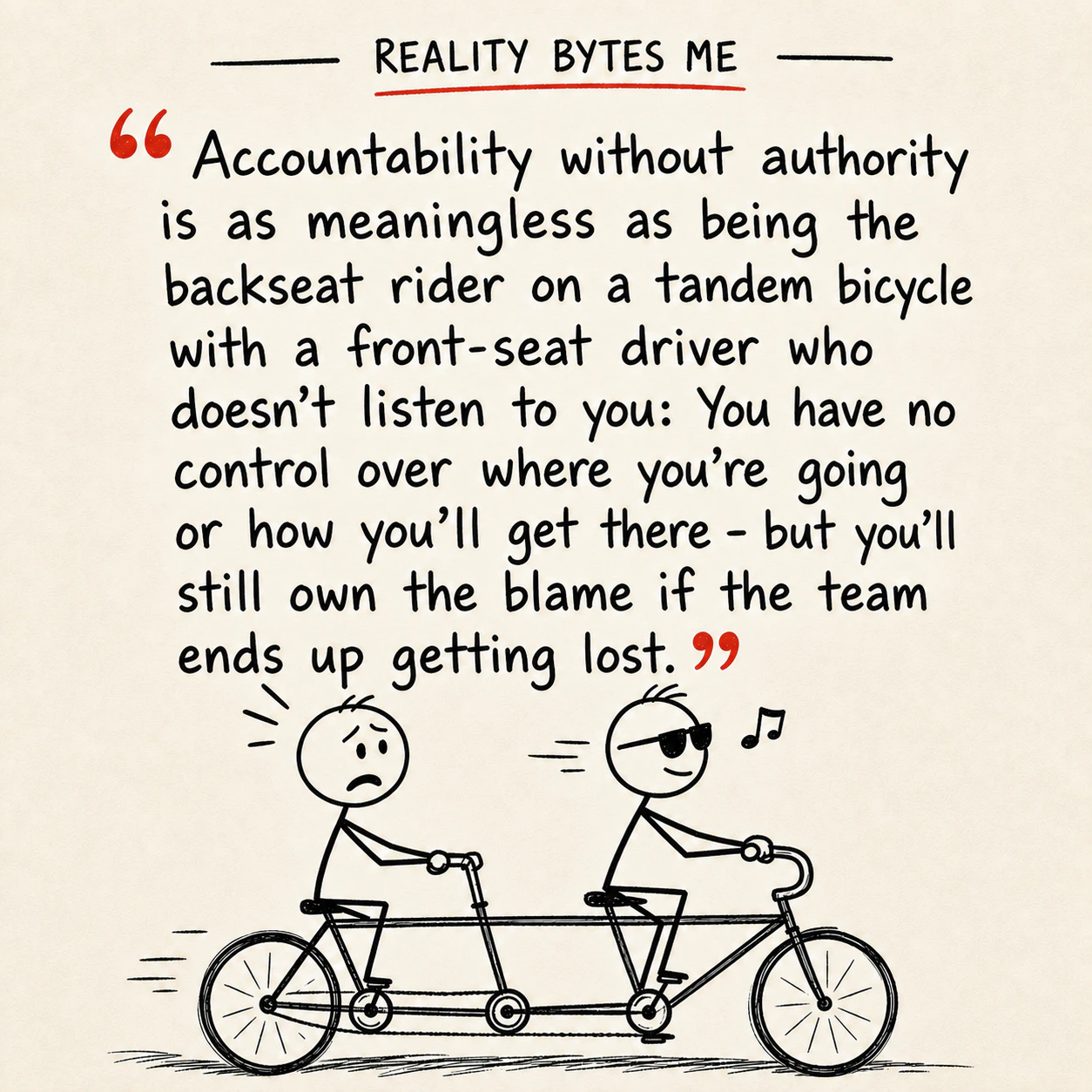
Two employees ride a tandem bicycle. The front rider wears sunglasses and appears to be whistling, while the worried rear rider has no control of the steering. Above them, the cartoon compares accountability without authority to occupying that back seat with a driver who will not listen: the passenger cannot determine the destination or route but will still inherit the blame if the team gets lost.
The tandem is an effective model because both people contribute effort while only one controls direction. The rear rider is not doing nothing. Pedalling harder may even make the bicycle move faster. What it cannot do is correct a destination chosen by somebody else. The image separates contribution from control, two things that an organizational responsibility chart can too easily treat as interchangeable.
In a project, this mismatch appears when a person owns the deadline but cannot change the scope, obtain the necessary resources or resolve conflicting instructions. They can coordinate, warn and ask. Those actions may influence the result, but influence is not the same as the authority to choose. If the decision-maker rejects the warning, the subsequent review should not pretend that the coordinator had the handlebars all along.
Matching authority to responsibility does not mean giving every employee unrestricted power. It means defining the decisions they can make and providing a usable route for decisions beyond that boundary. The rear rider needs a way to communicate that can actually change the steering, or an honest acknowledgement that the route belongs to the person in front.
The front rider's relaxed expression sharpens the satire. The person with control does not appear burdened by the accountability being carried behind them. The question is therefore not whether the passenger could have worked harder. It is whether the organization is willing to follow the chain of decisions with the same care it follows the chain of blame. A faster bicycle cannot compensate for steering in the wrong direction.