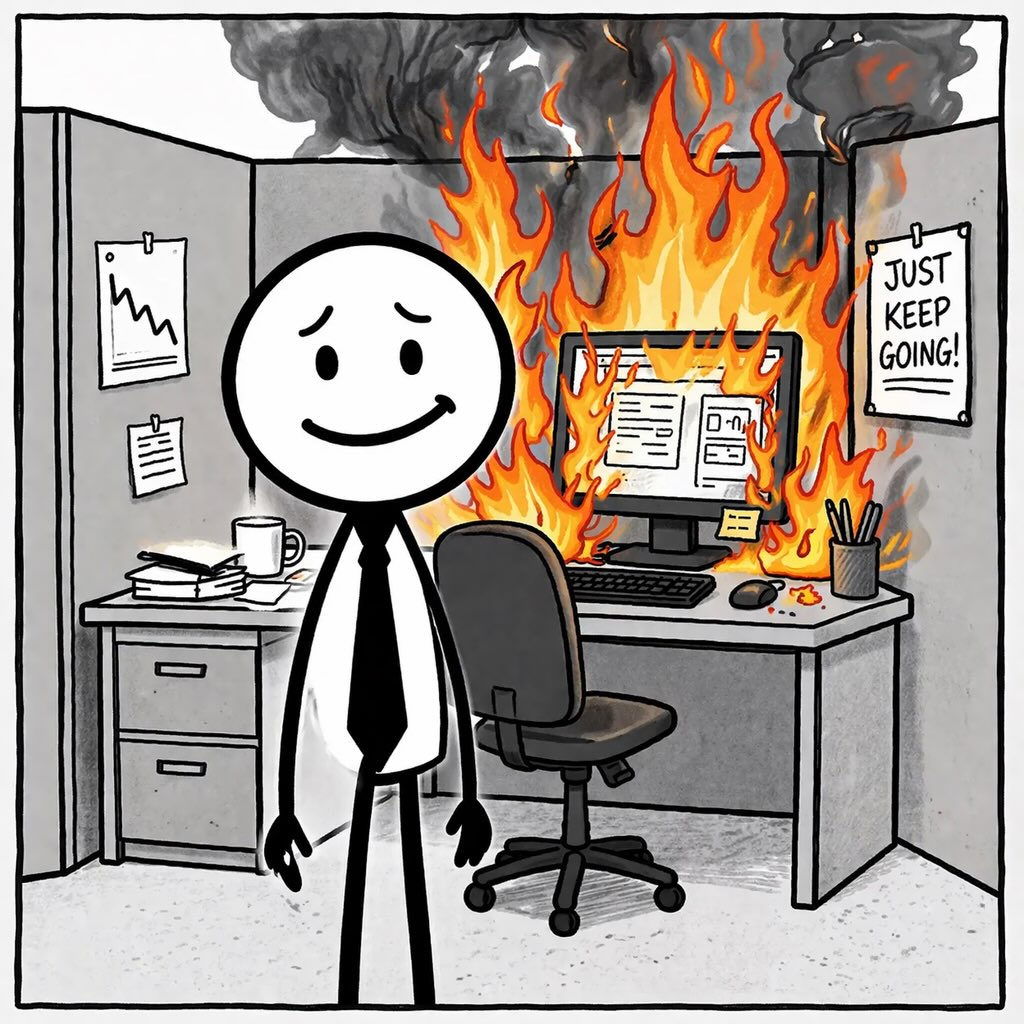
Published cartoon ·
Authority with accountability
Workplace satire from RealityBytesMe.
Scene and commentary
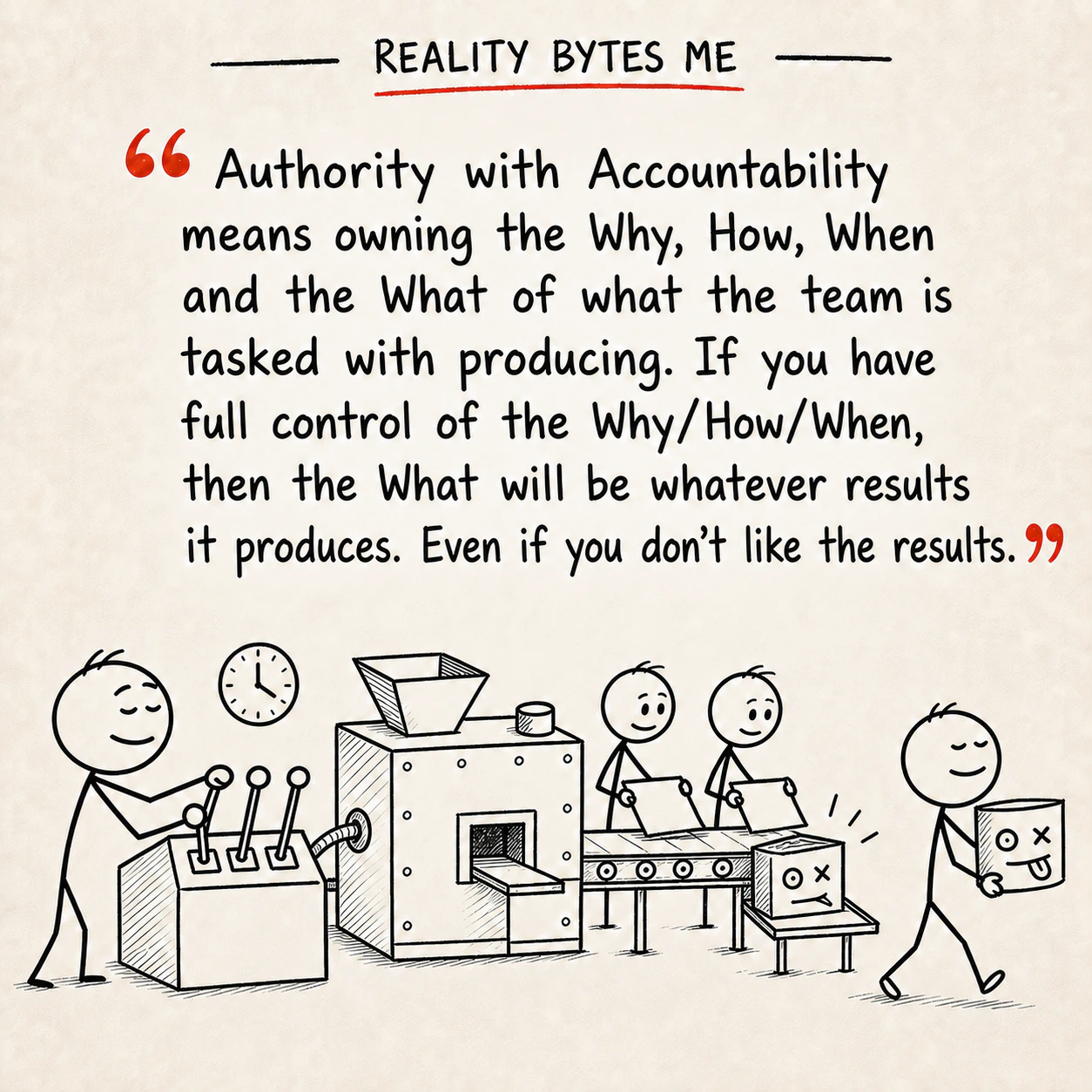
A manager operates levers connected to a production machine. Two workers stand beside the conveyor, and another figure carries away a box bearing a comically imperfect face. The caption connects authority with ownership of the why, how, when and what of the team's output. If someone controls the purpose, method and timing, the result remains connected to those choices even when it is not the result they hoped to receive.
The machine makes a causal relationship visible. The controls are at one end and the output is at the other, with the team working inside the process between them. A decision about speed, quality or resources can change what emerges. The person setting those controls cannot fairly treat the result as wholly independent of their instructions simply because other people performed the intermediate work.
This does not mean every disappointing outcome is solely a manager's fault. Equipment can fail, information can be incomplete and people can make mistakes. Accountability means examining those conditions alongside the choices that leadership actually controlled. It requires the same willingness to own a trade-off after its cost becomes visible that existed when its benefit made the decision attractive.
The imperfect box is important because it has already been produced. The time for wishing that the controls had a different relationship to the output has passed. A useful review asks what must change before the next box moves down the conveyor. Blaming the person carrying it away may produce an emotionally satisfying explanation while leaving the machine's settings untouched.
The cartoon offers a counterpoint to the rest of the accountability series. Authority is not merely the privilege of giving instructions. It includes accepting the consequences of deciding which instructions matter. A leader who wants a different result has a practical task: examine the purpose, method, resources and timing they influence, then change the relevant conditions. Disliking the output is information for the next decision, not a retroactive exemption from the previous one.