Published cartoon ·
The Micromanager
Every keystroke inspected. Every decision pre-decided.
Scene and commentary
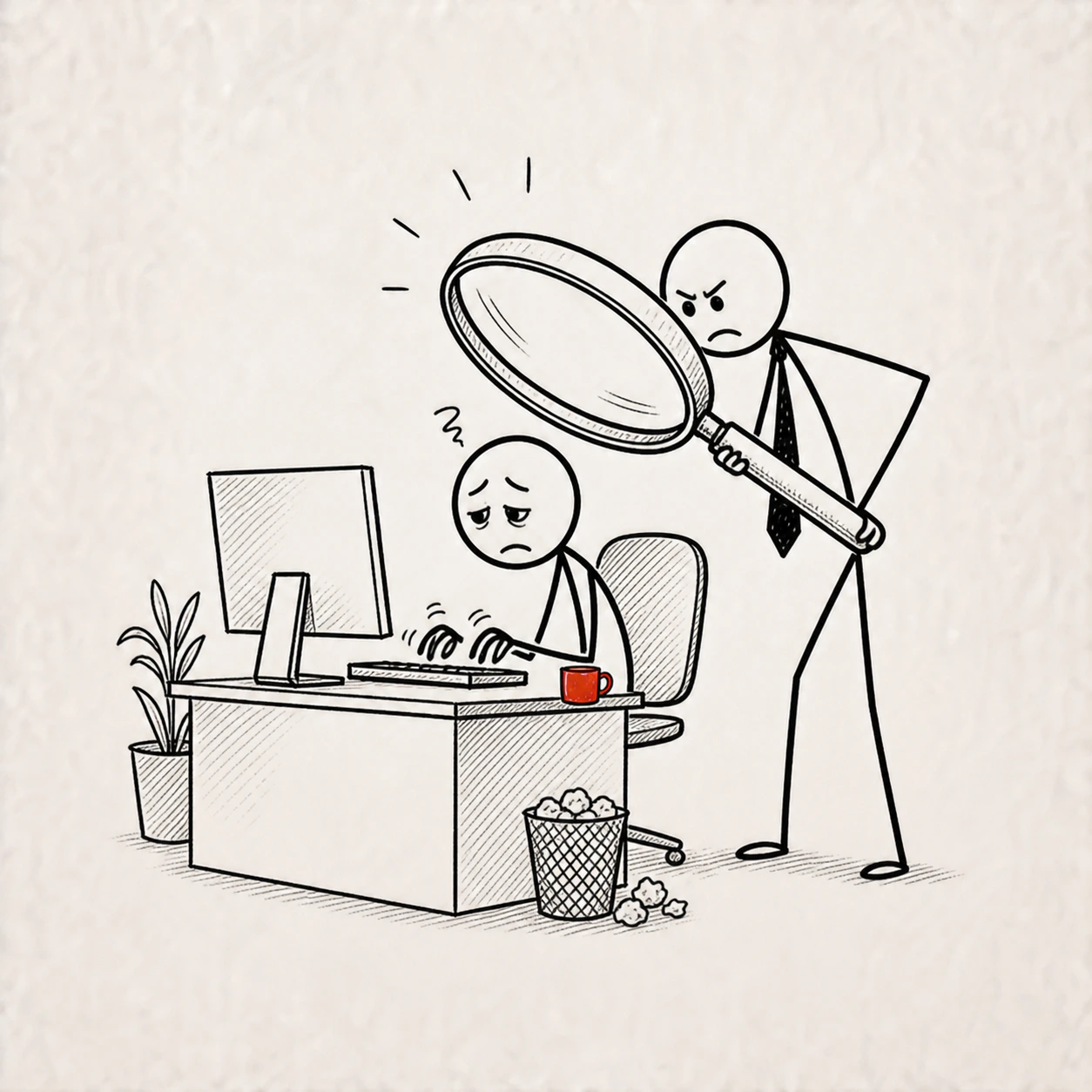
A worried employee types at a desk while a stern manager stands behind them holding an enormous magnifying glass. The scale of the glass makes supervision physically oppressive: it could inspect the whole person, not merely the keyboard. The employee's slumped expression contrasts with the manager's determined attention. A small red mug, discarded paper and an ordinary office plant keep the scene grounded in a recognizable working day.
The joke concerns the difference between knowing what is happening and controlling every movement that makes it happen. A manager may reasonably need confidence in quality, progress and risk. Watching every keystroke offers an abundance of observable detail without necessarily providing that confidence. It can reveal how someone performs an action while obscuring whether the action is the right one to perform at all.
Micromanagement also changes the employee's task. Instead of concentrating entirely on the work, they must anticipate how each step will look to the observer. A tentative experiment can appear indecisive. A pause to think can appear idle. The safest behavior becomes visibly following an expected method, even when another method would produce a better result. The manager gains conformity while potentially losing the judgment for which the employee was hired.
Close support can be appropriate when someone is learning, a task is unusually risky or a problem needs joint investigation. The distinction is whether the attention builds the person's ability to act independently. Helpful coaching explains the standard and gradually transfers judgment. The magnifying glass in this drawing does not look temporary; it looks like the manager's preferred operating model.
The image leaves a practical question hanging over the desk: what evidence would allow the manager to step back? If no completed work, demonstrated skill or agreed check can ever be enough, the issue is no longer the employee's performance. It is a system in which the feeling of control has become more important than creating the conditions for competent work.