
Published cartoon ·
The Idiot Wrangler
The competent manager who translates fantasy into reality and quietly keeps the lights on.
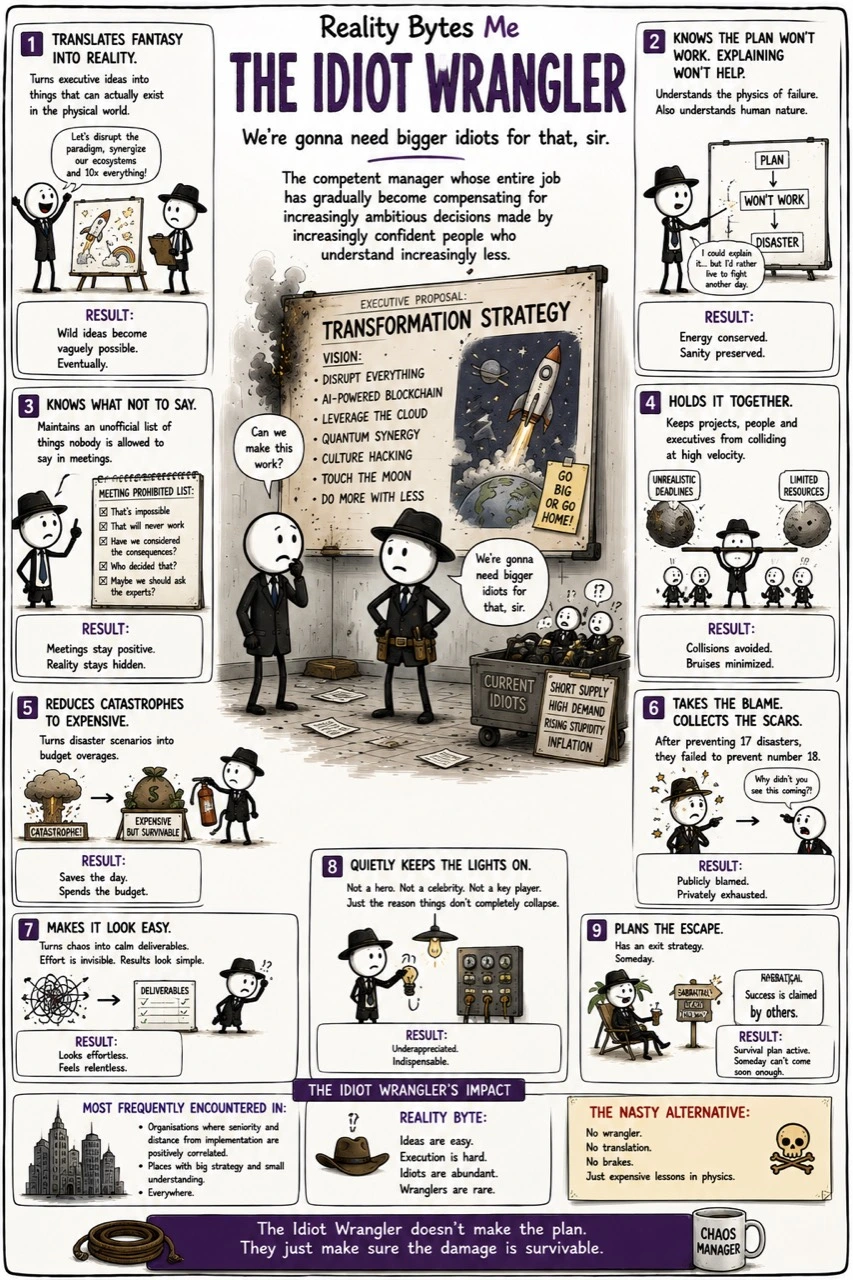
Why this one bites
The Idiot Wrangler is what happens when a management role becomes a shock absorber. Executive ambition enters at one end; something buildable, survivable and only moderately on fire emerges at the other.
This archetype is not the hero in the company story. It is the person maintaining a private list of things nobody may say in meetings, conserving energy by declining to explain physics, and accepting blame for disasters that did not happen.
Accessible summary
- A nine-part field guide shows the wrangler translating fantasy, recognizing plans that will not work, knowing what not to say, holding teams together, reducing catastrophes to expensive outcomes and taking the blame.
- The final panels show the wrangler making chaos look easy, quietly keeping the lights on and planning an eventual escape.
- Reality Byte: Ideas are easy. Execution is hard. Idiots are abundant. Wranglers are rare.
Reading notes
The wrangler's success can be difficult to observe because much of it consists of events that never happen. A promise is softened before it becomes a commitment. A team is protected from a distracting demand. A dispute is settled before it consumes a week of delivery time. If the organization measures only visible interventions, this preventive work may look less impressive than the dramatic recovery required when prevention fails.
That creates a trap for the person who becomes good at it. Their ability to absorb chaos can conceal the amount of chaos being produced. Because the team keeps functioning, the surrounding system sees little reason to change. The wrangler becomes the unofficial dependency that makes an otherwise unsustainable process appear workable, and their eventual absence reveals how much of the operation existed in one person's judgment and patience.
The field guide is therefore both recognition and warning. Translating ambition into feasible work is a real contribution; normalizing unlimited contradiction is not a durable organizational design. The useful question is which recurring rescue should become an explicit decision, staffing change or simpler process. Otherwise the organization keeps celebrating a person's resilience while consuming the conditions that make resilience possible. The escape plan at the end is the consequence of that arithmetic, not a surprising failure of commitment.