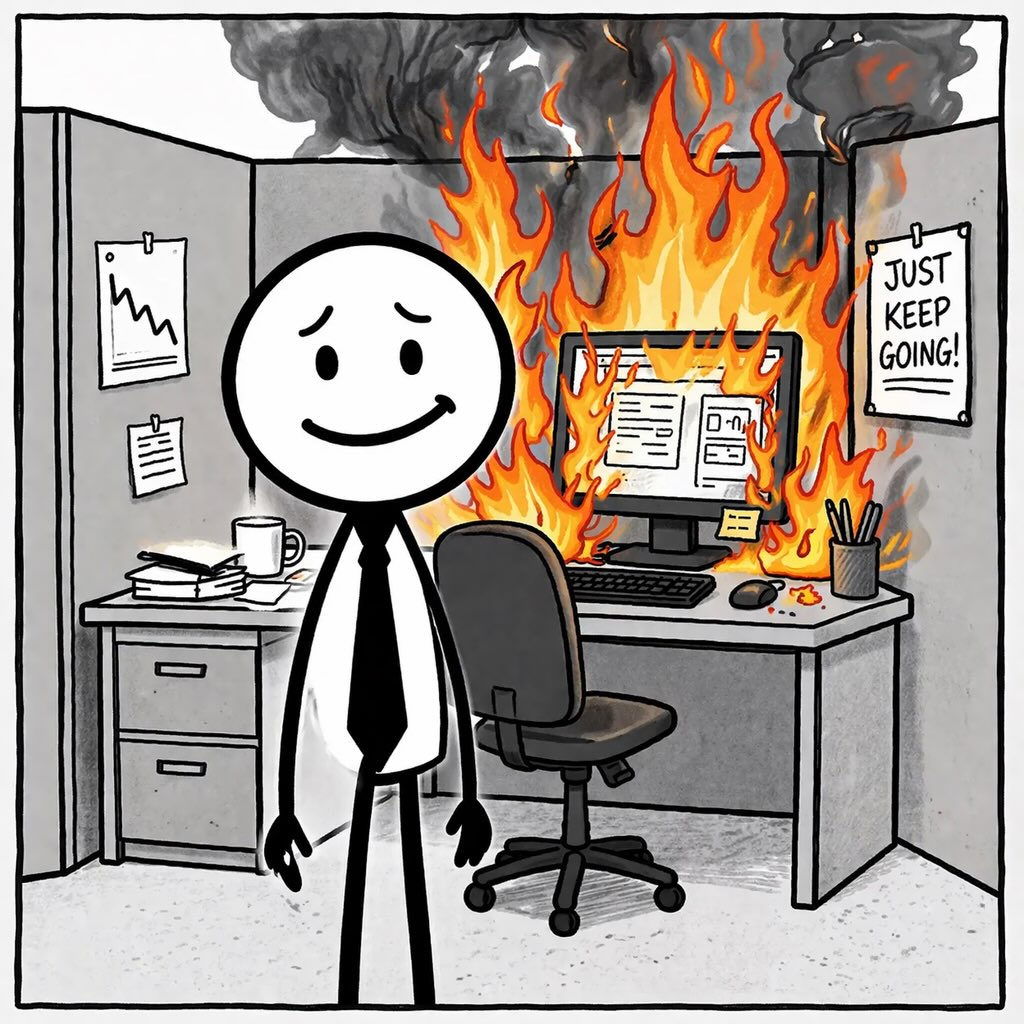
Published cartoon ·
Pokémon of IT — evolution chart
Workplace satire from RealityBytesMe.
Scene and commentary
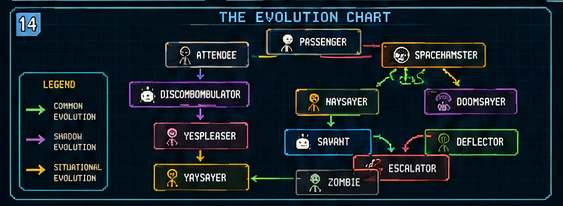
The evolution chart connects the IT creatures with coloured arrows across a dark grid. A legend distinguishes common, shadow and situational paths. The Passenger, Attendee and Spacehamster occupy the upper area, while other branches lead through agreement, questioning, exhaustion and escalation. Instead of presenting each character as a permanent identity, the chart imagines a workplace in which repeated experiences can move somebody from one recognizable pattern into another.
The legend matters because it gives the arrows different meanings. A situational change need not imply that a person has acquired an entirely new personality. A shadow path suggests an exaggerated or costly response to the pressures represented elsewhere in the series. These distinctions belong to the cartoon's fictional rules; they are not probabilities or a scientific account of how people develop at work.
The layout also refuses a simple upward ladder of improvement. Moving along an arrow does not necessarily mean becoming more capable. In an organization, becoming better adapted to local incentives may mean learning to avoid an awkward decision, perform agreement or conserve effort. A behaviour can protect its owner in the short term while making the surrounding work harder to coordinate. The chart turns that uncomfortable possibility into a game-like map.
Read beside the individual cards, the connections invite questions about triggers. What changes when a person who used to ask questions begins predicting failure? What happens when an accommodating colleague runs out of room to agree? Which conditions turn a newcomer into an exhausted runner? The relevant evidence would come from actual conversations and working conditions, not from assigning a fictional creature name to someone from a distance.
The chart's practical value is therefore in examining the environment around a transition. A team can change the clarity of responsibilities, the number of simultaneous commitments and the consequences of raising a concern. Those choices may interrupt an unhelpful pattern before it becomes routine. The arrows make the series more than a cabinet of amusing labels: they remind the reader that organizations help produce the behaviour they later describe as somebody else's personal problem.