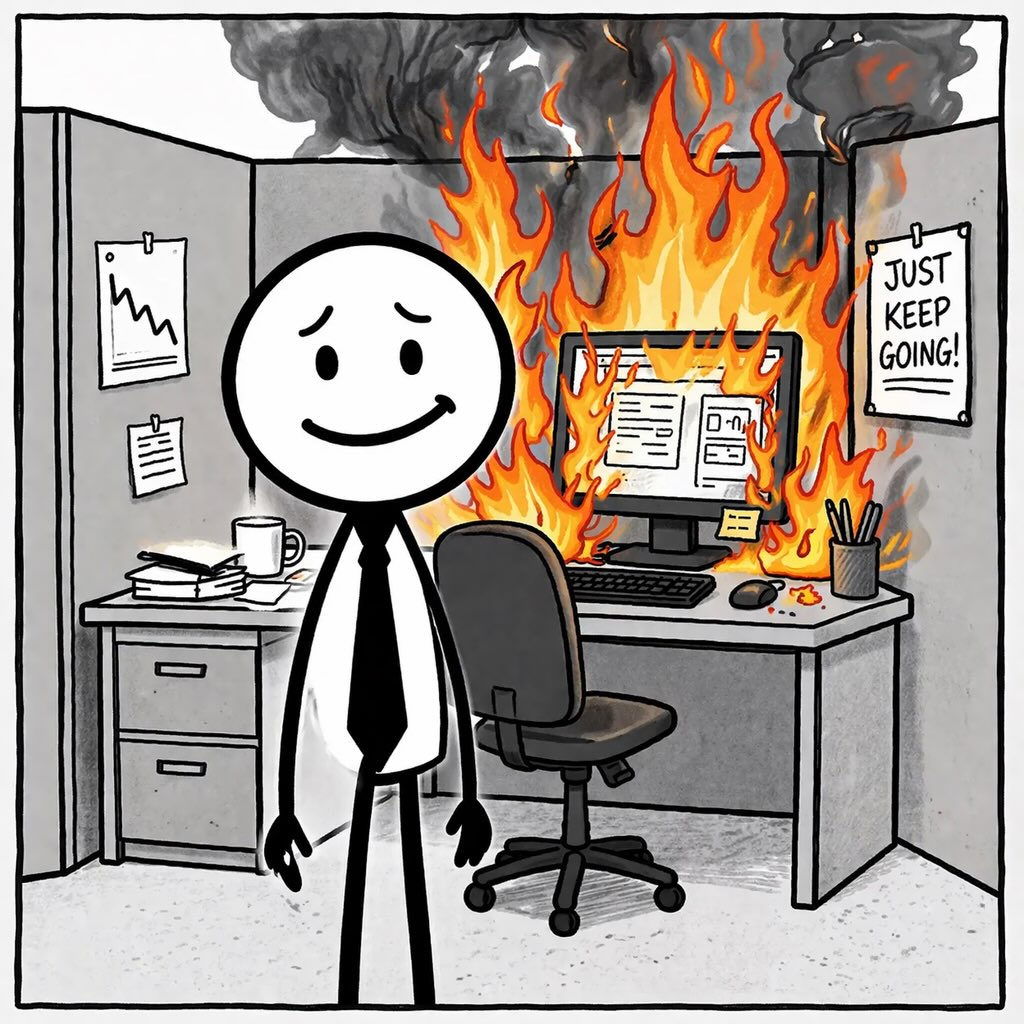
Published cartoon ·
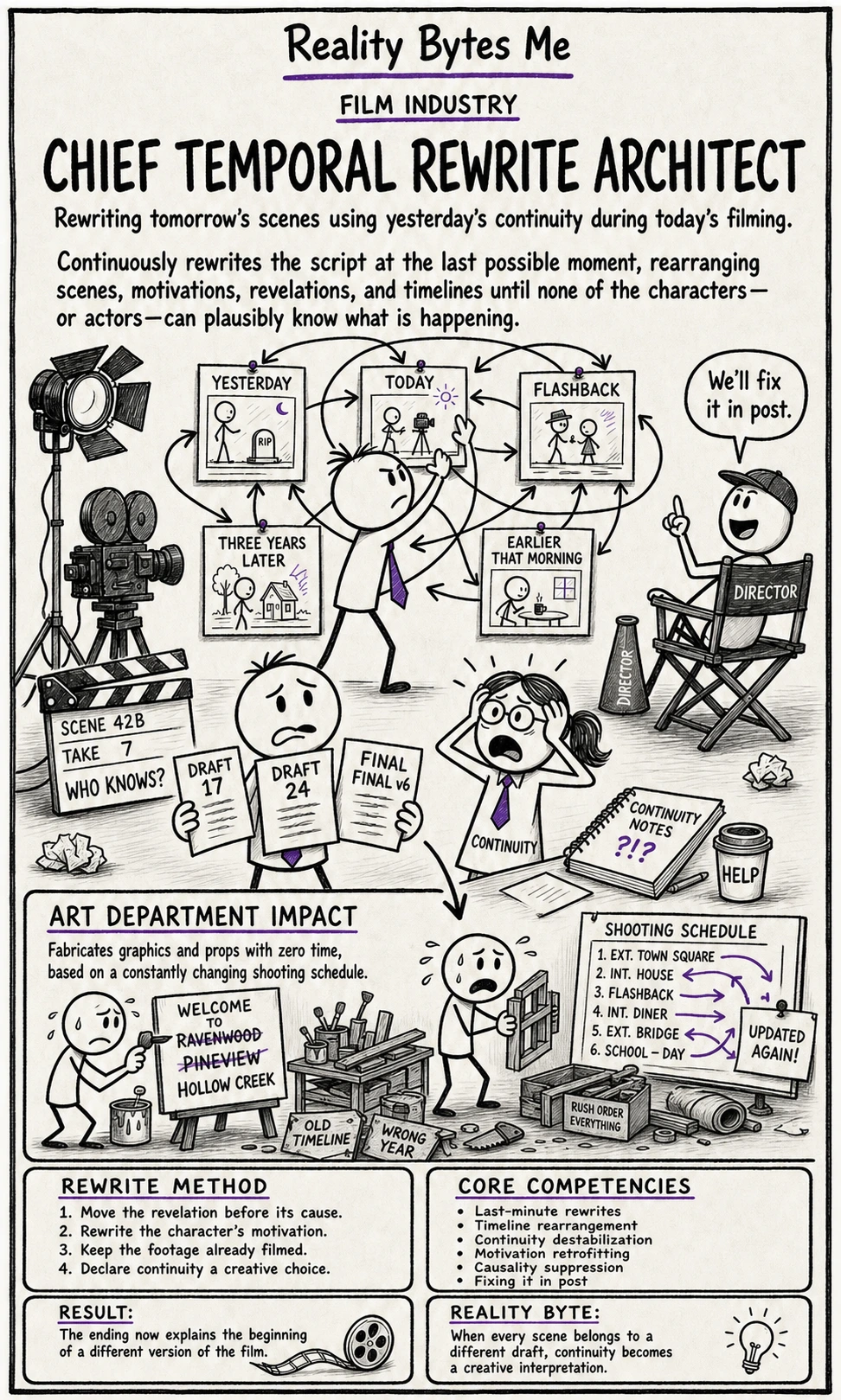
Chief Temporal Rewrite Architect
Tomorrow's scene has changed yesterday's continuity again.
Why this one bites
The rewrite architect rearranges the film's timeline while shooting continues. Different drafts coexist, the director promises a fix in post and continuity must reconcile scenes that no longer belong to the same version of the story.
The lower section follows the consequences into the art department. Signs, graphics and props need physical revisions when names, dates or settings change; they cannot simply absorb a new paragraph of script. The satire makes late creative decisions visible as somebody else's immediate production work.
Accessible summary
- A film set is surrounded by connected scenes labelled Yesterday, Today, Flashback, Three Years Later and Earlier That Morning. Crew members hold conflicting drafts while continuity struggles to keep up.
- Below, the art department revises signs and props against an updated shooting schedule. The closing joke describes continuity as creative interpretation when each scene belongs to a different draft.
Reading notes
A script revision can be a few lines on a page and a large physical change on a set. A date affects a newspaper, a character's name affects signage, and a different location changes what a document or screen should show. The art department has to turn the latest narrative decision into objects that the camera can photograph. The speed of editing text does not measure the speed of rebuilding those objects.
Continuity adds another dependency. Scenes may be shot out of story order, and material already filmed cannot automatically adopt a new draft. A prop that is correct for tomorrow's scene may now contradict yesterday's footage. Someone has to identify that conflict while departments are working from different versions and the shooting schedule continues moving. The timeline diagram makes this coordination burden visible as a problem shared across many scenes rather than isolated inside the writer's document.
Creative revision is part of filmmaking, not an error to eliminate. The satirical target is the assumption that its consequences will resolve themselves downstream. Clear version ownership, prompt change notices and an honest account of affected assets make revision possible without requiring every department to become a time traveller. The rewrite architect's impressive title describes the fantasy; continuity and graphics supply the labor that keeps the fantasy photographable.