Published cartoon ·
Chief Blame Distribution Officer
One failure enters. Enough blame leaves to prevent a repair.
Why this one bites
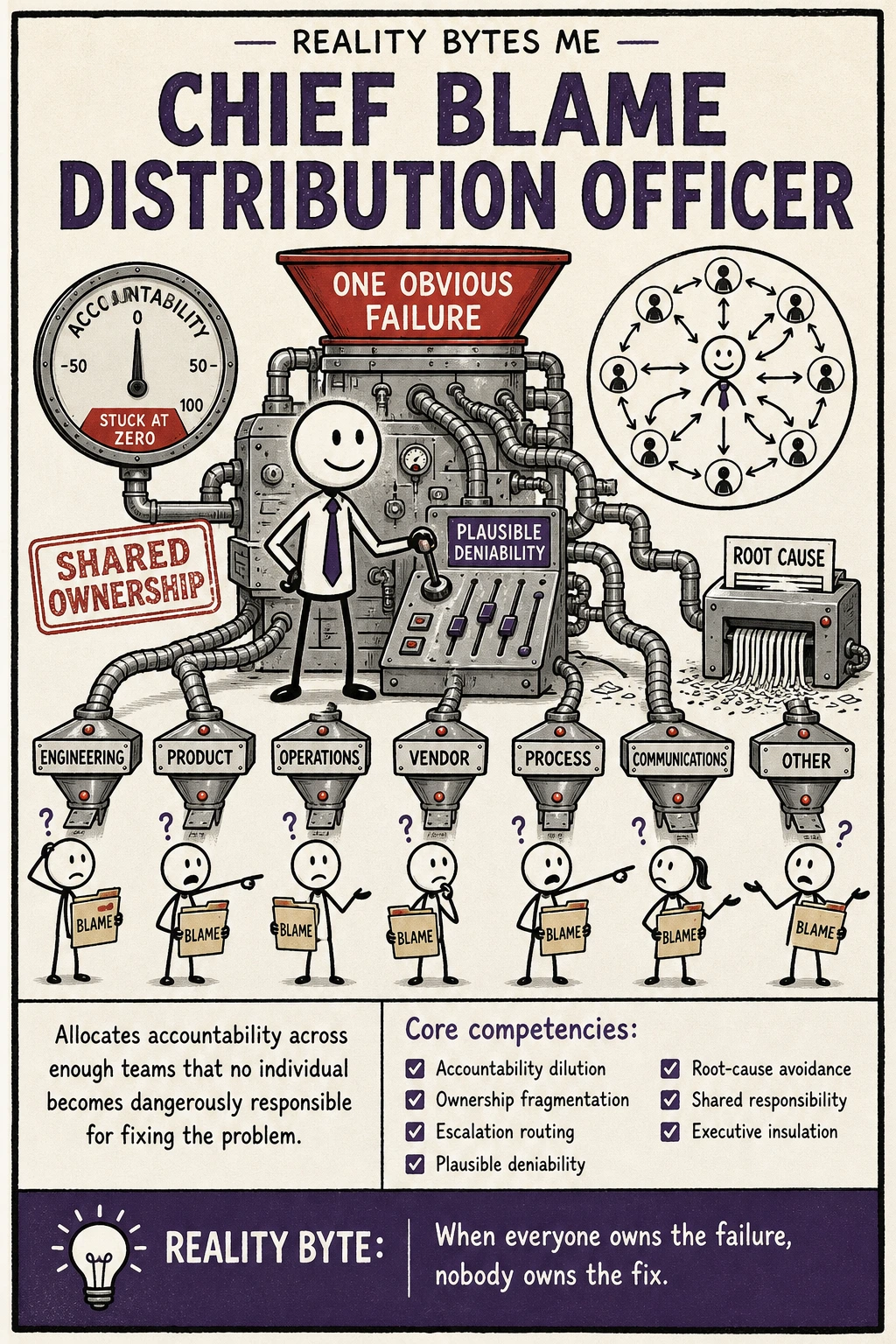
The machine accepts one obvious failure and distributes it across departments, vendors, process and communications. Its accountability gauge stays at zero. The organisation has produced many implicated parties without producing anyone responsible for fixing the problem.
The joke turns shared ownership into a dilution system. Collaboration can spread the ability to act, but this apparatus spreads exposure while insulating the person operating it. Root-cause analysis disappears into a shredder, ensuring the explanation remains as fragmented as the ownership.
Accessible summary
- A smiling officer operates a machine that channels blame to seven worried recipients. The controls include plausible deniability, while a root-cause document enters a shredder.
- The role description distributes accountability so widely that no individual becomes responsible for the fix. The final line contrasts universal ownership of failure with nobody owning its repair.
Reading notes
Most complicated failures have more than one contributing cause. Recognizing that complexity should make the repair more precise, not make responsibility evaporate. This machine takes a true observation about interdependence and turns it into an excuse for collective inaction. Every recipient receives a portion of the explanation, but no one receives a clear decision to make or a defect to correct.
The shredded root-cause document is important because a useful investigation would threaten the distribution system. It might identify a preventable decision, an ignored warning or a resource that was deliberately withheld. Those findings can be uncomfortable, but they create specific opportunities to change the next outcome. A cloud of departmental blame is politically safer because it can be repeated without requiring any such change.
Repair ownership need not imply that one person caused everything. Someone can coordinate a fix while the review honestly records several contributors. Confusing those two jobs makes organizations reluctant to assign either. The cartoon presents that confusion as an engineered product: accountability is processed until its concentration reaches zero. The closing question is therefore practical rather than moral. After all the explanations have been distributed, who has the authority, capacity and deadline to make the system work differently?