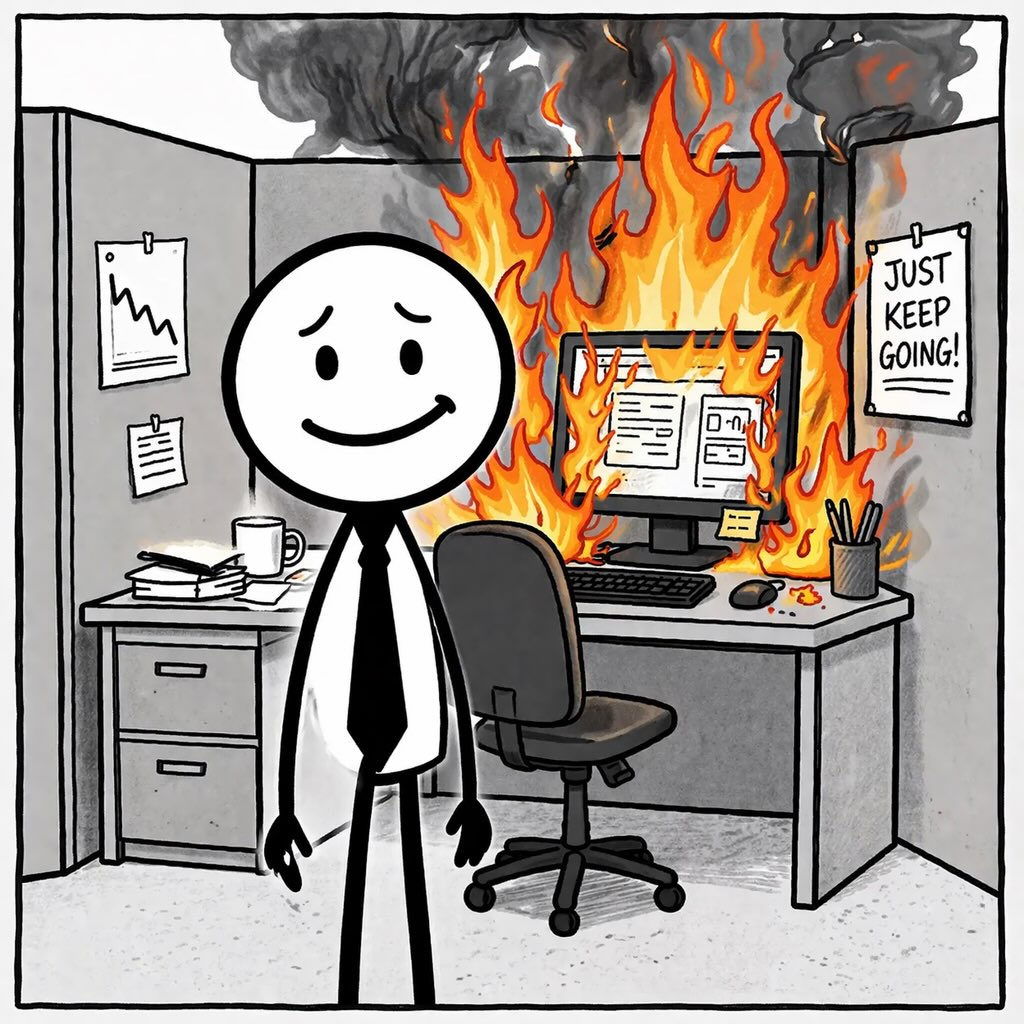
Published cartoon ·
Performance Reviews 101
Workplace satire from RealityBytesMe.
Scene and commentary
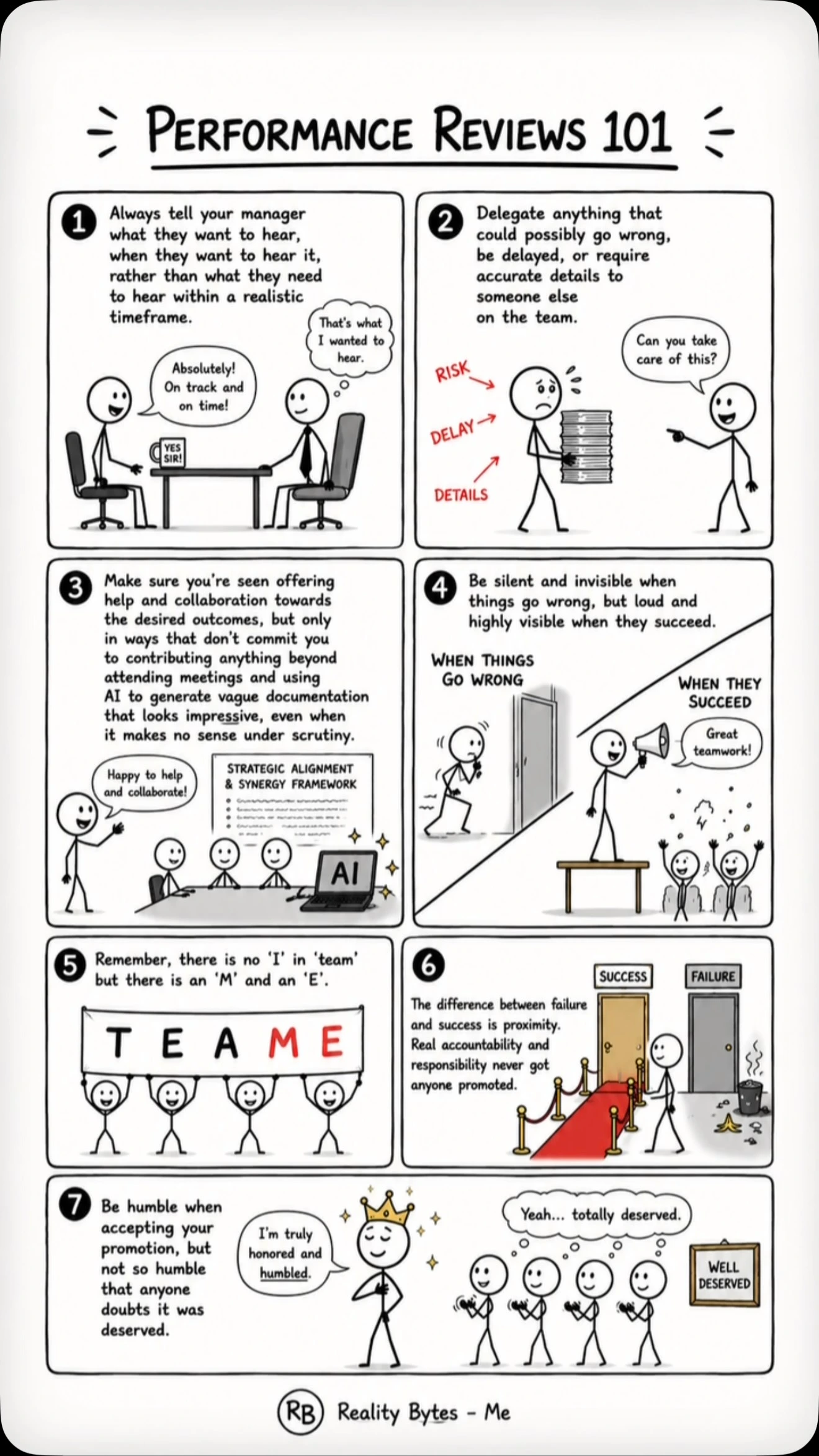
Performance Reviews 101 presents seven pieces of deliberately bad career advice. The illustrated employee reassures management, transfers risky work to somebody else, offers visible collaboration without a concrete contribution and disappears when things go wrong. Success brings a megaphone and a celebration. Later panels rearrange the letters of team around ME, place the employee beside the attractive success door and finish with a crown, applause and a carefully modest acceptance speech.
The sequence is a satire of how performance can be narrated rather than performed. Each move increases the employee's association with desirable outcomes while reducing exposure to the work that could produce an undesirable one. The person carrying the stack of documents also inherits the arrows labelled risk, delay and details. Delegation has become a method of distributing personal danger rather than organizing delivery.
The collaboration panel adds a specific variation: an impressive framework and generated documentation can make participation highly visible without making responsibility equally visible. The problem is not that meetings or writing are inherently unproductive. It is that nobody can point from the polished output to a contribution that changed the result. A document becomes evidence of effort merely because it exists and looks substantial.
The final promotion exposes the incentive connecting all seven panels. If evaluation relies mainly on confidence, proximity and memorable appearances, these tactics may look successful inside the cartoon's organization. The people doing difficult, uncertain work can appear less polished precisely because their contact with reality produces qualifications and setbacks. An evaluation process can unintentionally reward distance from the work it claims to measure.
The printed advice should therefore be read in reverse. A fair review needs a record of decisions, commitments, outcomes and shared contributions across the period, including the less theatrical work of preventing problems. It should distinguish a helpful handoff from a disappearing act. The crown is funny because everyone can see the performance of humility; the more useful question is whether anyone has checked the performance that supposedly earned it.