Published cartoon ·
The Cost of Ignorance
Workplace satire from RealityBytesMe.
Scene and commentary
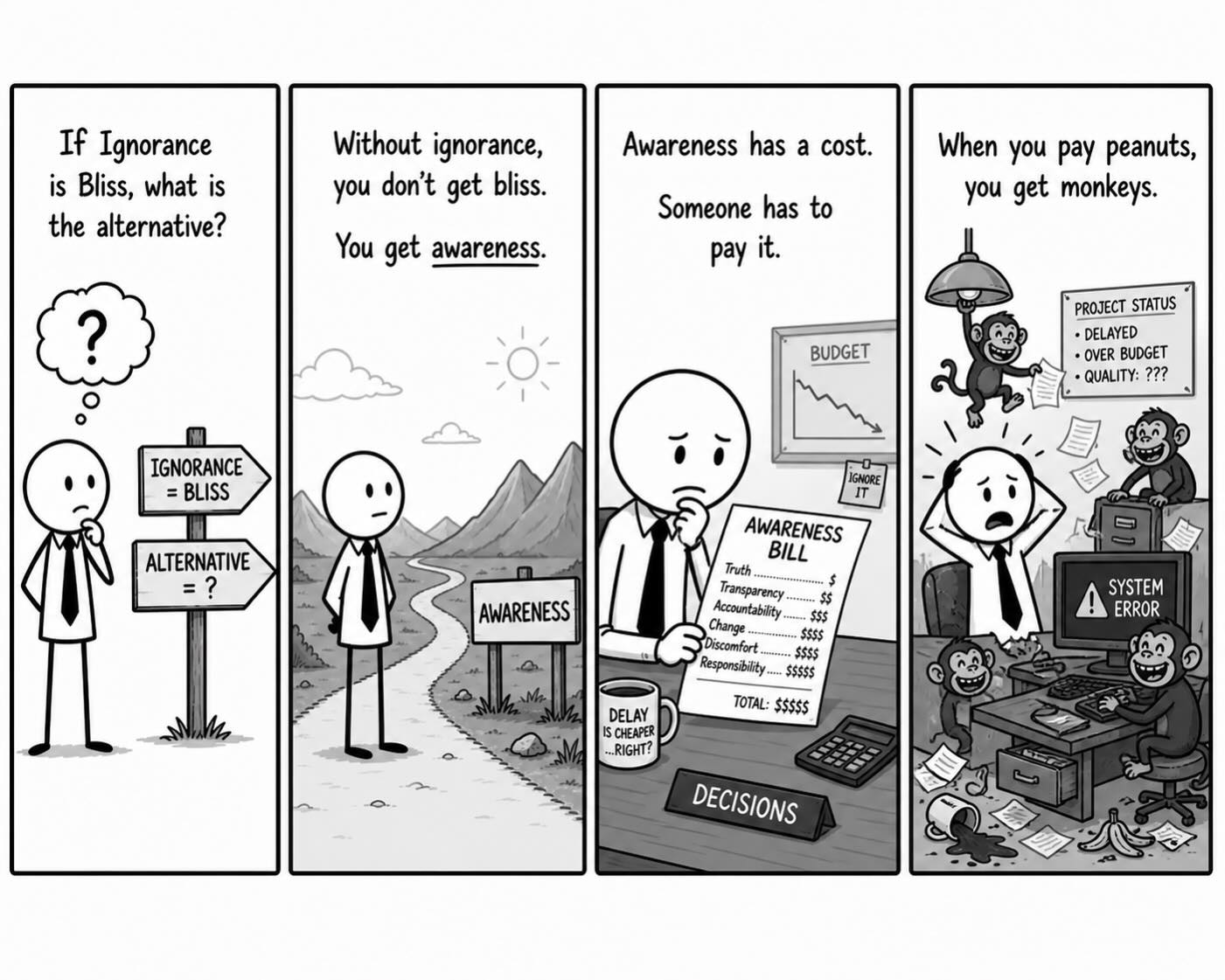
This four-panel cartoon starts at a signpost offering ignorance and an unnamed alternative. The next panel names that alternative as awareness, represented by a winding path through an open landscape. Awareness then arrives as an itemized bill at an office desk: truth, transparency, accountability, change, discomfort and responsibility all carry a cost. In the final panel, a cheap operation has become a room full of monkeys, loose paperwork and a computer reporting a system error.
The progression changes the meaning of cost. At first, ignorance seems attractive because it offers emotional comfort. By the third panel, knowing the situation requires decisions that may consume money, attention or political goodwill. The last panel makes the counterargument visible: declining those costs does not produce a functioning organization for free. It can simply move the expense into delay, rework and confusion.
The falling budget chart and the mug questioning whether delay is cheaper sharpen that distinction. A postponed decision can make a current report look better while allowing the underlying problem to grow. The apparent saving belongs to one reporting period; the consequences arrive in another. Nobody needs to falsify a spreadsheet for that mismatch to become misleading.
The monkeys are a visual exaggeration of the proverb about paying peanuts, not a serious assessment of individual workers' worth. The practical issue is whether expectations match the capability, support and resources provided. Hiring cheaply while demanding expert judgement does not make expertise unnecessary. Nor does paying more automatically guarantee it. The choice needs to be evaluated against the work that actually has to happen.
Read across the panels, the cartoon asks who pays for reality being acknowledged. A team that reports a problem may appear to be creating expense because its proposal contains an explicit price. A team that ignores the same problem can look economical until the hidden bill arrives. Awareness is uncomfortable partly because it makes that bill legible, and somebody must then decide which costs to accept deliberately.