Published cartoon ·
Just Keep Going
Workplace satire from RealityBytesMe.
Scene and commentary
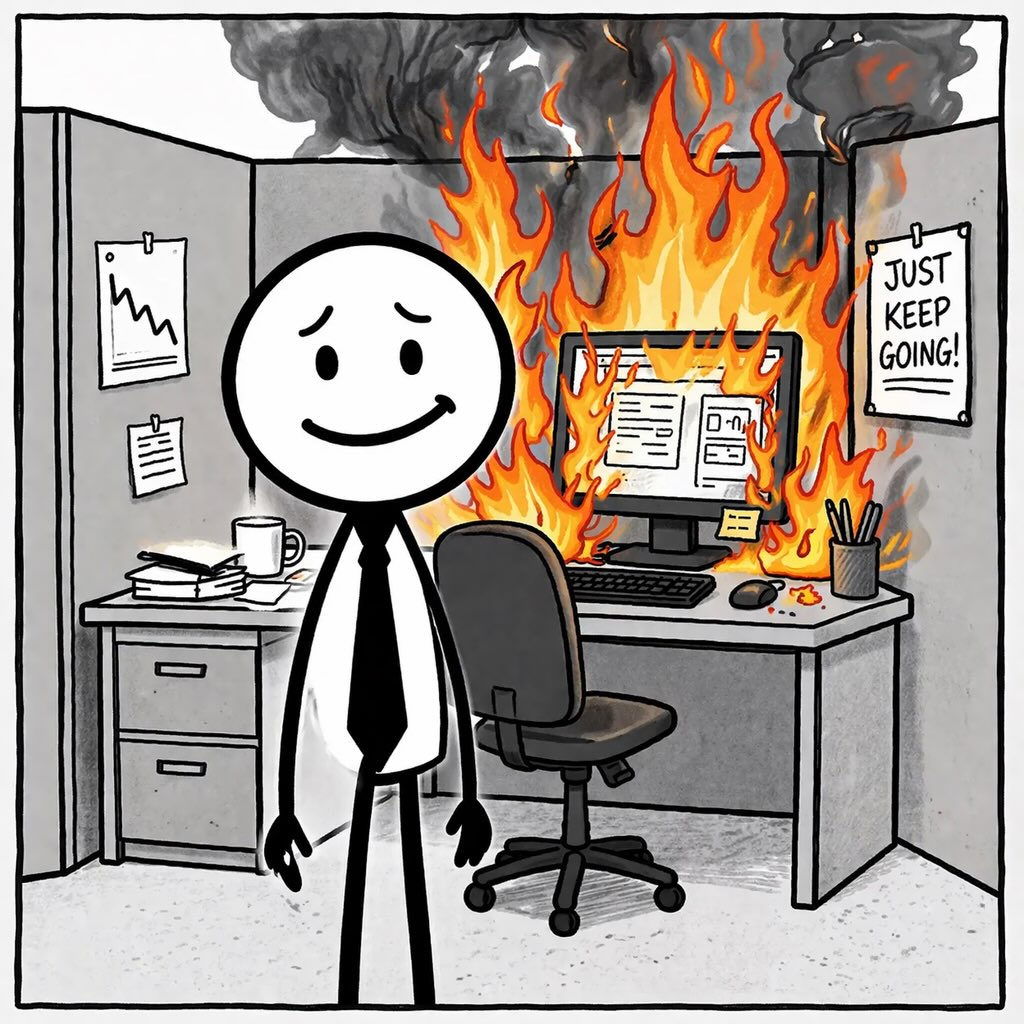
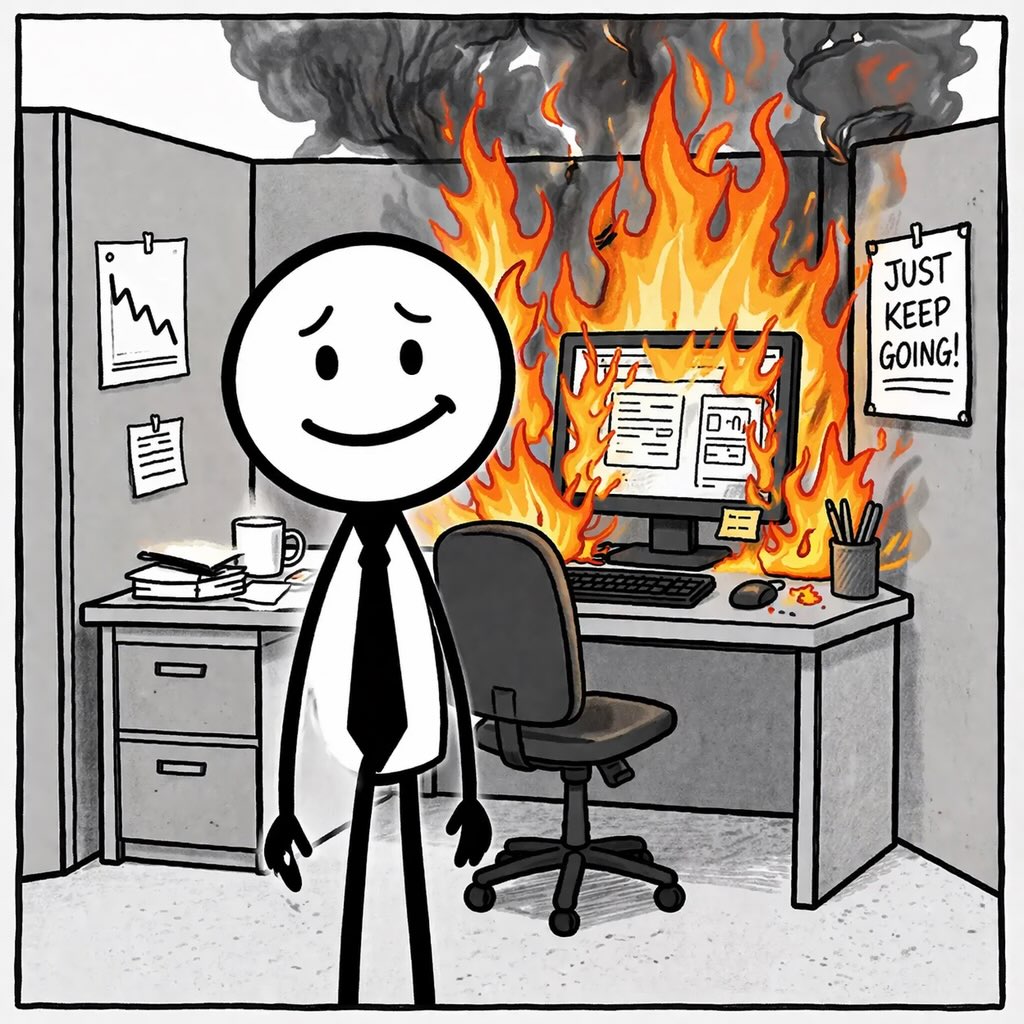
A smiling employee stands in front of a desk that is on fire. Orange flames rise around the monitor and climb into heavy black smoke, while the rest of the office remains largely monochrome. A falling chart hangs on one wall. On the other, a motivational poster instructs the room to keep going. The smile, the poster and the burning equipment present three competing accounts of how the working day is proceeding.
The humour depends on the instruction being reasonable in some circumstances and absurd in this one. Persistence can help when a task is difficult but still viable. It becomes a problem when continuing the same activity prevents anyone from responding to a changed situation. The poster has no mechanism for noticing the difference. Its advice is fixed even while the room supplying the context is being destroyed.
The employee's expression makes the picture more uncomfortable than a simple disaster scene. We cannot tell whether the smile represents denial, an attempt to reassure others or a learned expectation that visible concern will be punished. Those possibilities matter because a cheerful status update does not establish that the person giving it feels safe or believes it. The image leaves that tension unresolved.
In a workplace, the equivalent fire might be an overloaded service, an impossible delivery commitment or a recurring defect that nobody is allowed to prioritize. Asking people to remain positive can then become a substitute for deciding what should stop. The team receives encouragement while the conditions requiring intervention remain untouched. More effort may feed the very process that is failing.
A useful response to this cartoon is to distinguish resilience from compulsory continuation. Resilience can include changing the plan, reducing the load and admitting that the previous approach no longer works. It requires permission to describe the flames accurately. The wall chart already supplies one warning and the monitor supplies another. What the office lacks is not another slogan but a decision that takes those warnings seriously before the desk disappears altogether.