
Published cartoon ·
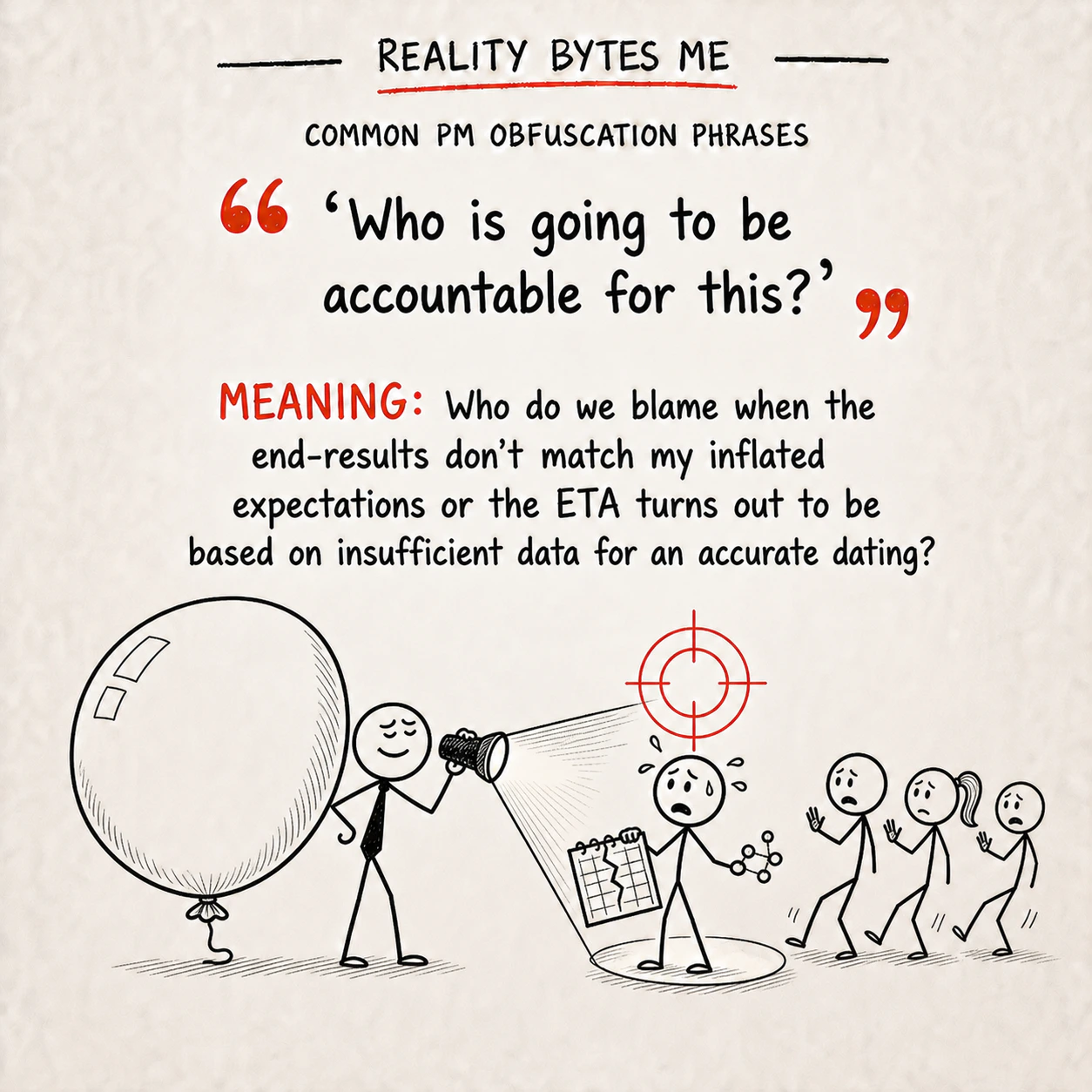
Who is going to be accountable for this?
The expectations are inflated. The target is ready.
Why this one bites
The manager holds a balloon while directing a spotlight and target toward an employee with a schedule and diagram. The question arrives as a search for someone who will explain the gap between a preferred outcome and an inadequately grounded estimate.
Accountability could mean giving a person the power to make the plan realistic. Here it means identifying the person to blame when it is not. The other employees back away, recognising that the light signals exposure rather than authority.
Accessible summary
- A manager holding a large balloon shines a light on a worried employee carrying planning documents. A red target appears above the employee as colleagues retreat.
- The caption links the search for accountability to inflated expectations and an ETA based on insufficient information.
Reading notes
The timing of the question reveals its purpose. Asked before a decision, accountability can clarify who will choose, monitor and respond. Asked only after something has gone wrong, it may begin a search for a person who can absorb the explanation. The same language can therefore support responsible work or protect the people who shaped the conditions of failure.
An honest account follows the decisions as well as the tasks. Who approved the scope? Who set the date? Who declined the resources or accepted the risk? The employee closest to the broken result may understand it best without having controlled those choices. Assigning that employee the whole story makes the explanation easy to communicate while removing the information needed to prevent a repeat.
This does not mean that shared decisions excuse poor work. It means responsibility should be attached to actual influence rather than proximity to the damage. A useful review can distinguish an implementation error from an impossible commitment and address both. The cartoon exposes the convenience of asking for one name when several decisions are involved. The organization may achieve a tidy answer to who is accountable while leaving unanswered the more difficult question of what will change next time.