Published cartoon ·
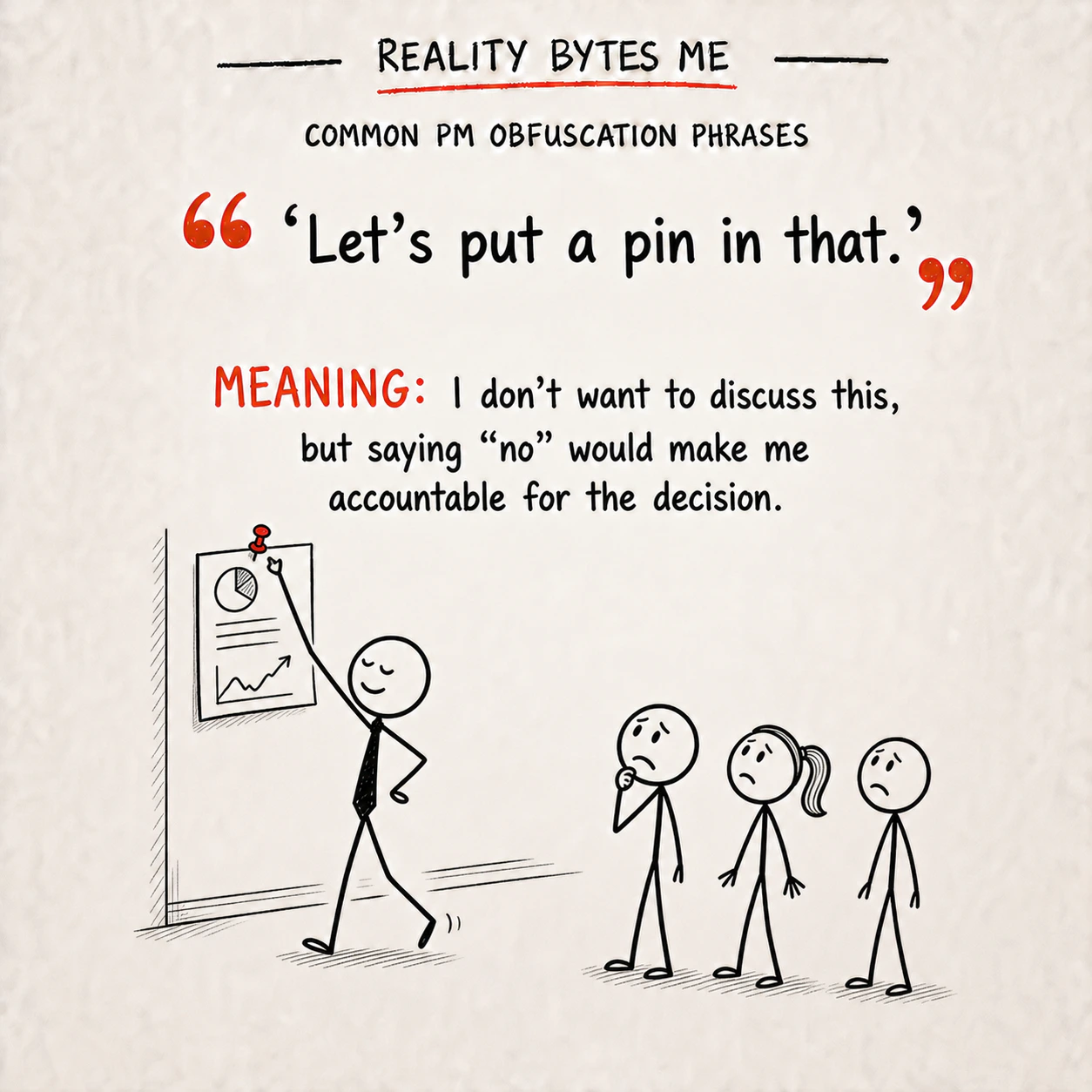
Let’s put a pin in that
A decision can be postponed until nobody remembers who declined to make it.
Why this one bites
The pin looks like a promise to return. In the cartoon, it performs the work of a rejection without requiring anyone to say no. The proposal remains visible enough to count as acknowledged and suspended enough to avoid a decision.
That arrangement transfers the waiting to the people who needed an answer. The joke lives in the gap between preserving an item and giving it a future: a pin supplies neither an owner nor a date.
Accessible summary
- A manager pins a sheet of charts to the wall while three concerned colleagues look on.
- The caption explains that openly refusing the discussion would make the speaker accountable for the decision.
Reading notes
Deferral has a legitimate place in a meeting. A team may need evidence, a decision from another group or time to compare options. But useful deferral has a condition for ending. The proposal will return when the estimate arrives, when a named person answers, or at the next decision meeting. Without that condition, the pin marks a place where responsibility has stopped moving.
The people waiting do not experience the delay as neutral. They may continue work on assumptions that the unanswered proposal would change. They may have to hold resources available, explain uncertainty to customers, or revisit the same question next week. The manager has deferred a conversation; the team has inherited an ongoing cost. That mismatch is why a polite phrase can become irritating long before anyone openly refuses the request.
A pin is particularly effective because it resembles care. Throwing the proposal away would make the rejection obvious. Keeping it on display allows everybody to say it has not been forgotten, even when no decision is approaching. The useful follow-up is therefore less about whether the item is still recorded and more about what will cause someone to act on it. Preservation is not the same thing as progress.