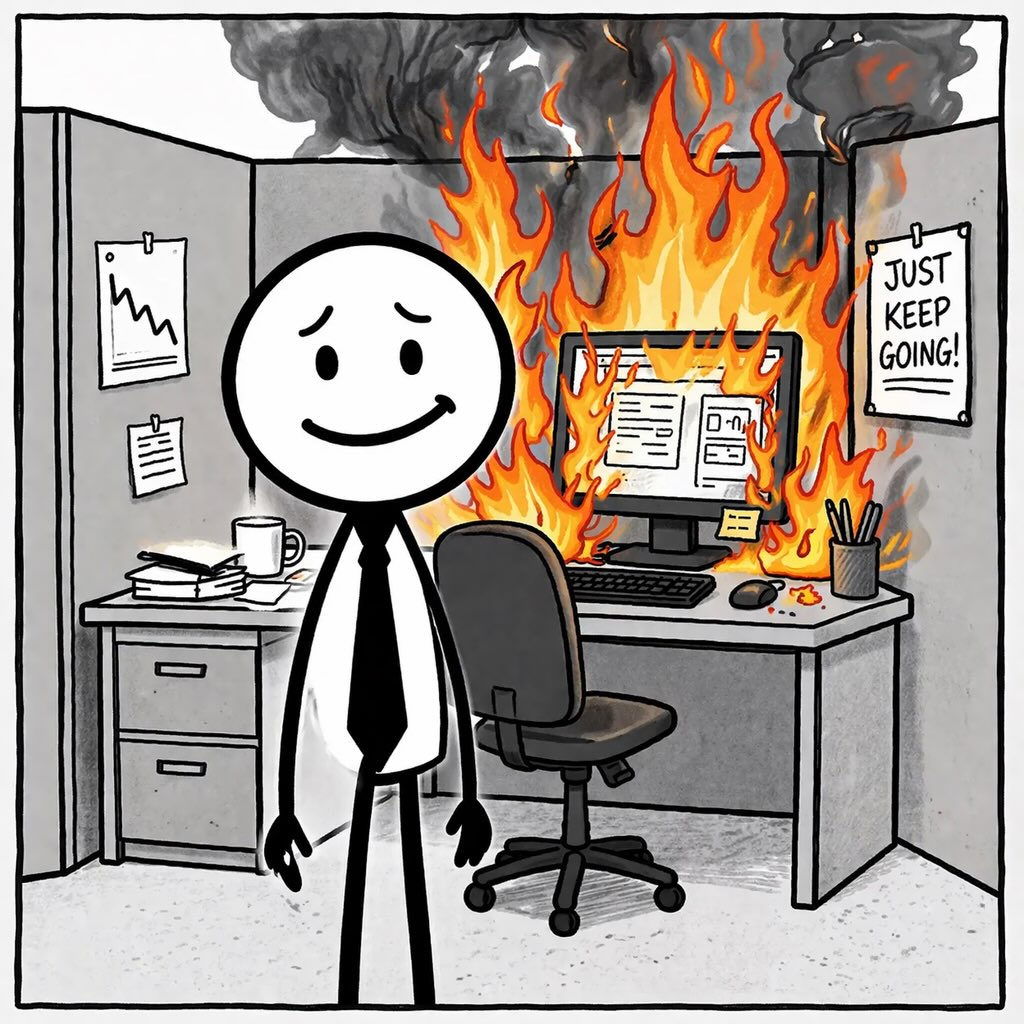
Published cartoon ·
I just want to make sure we’re aligned
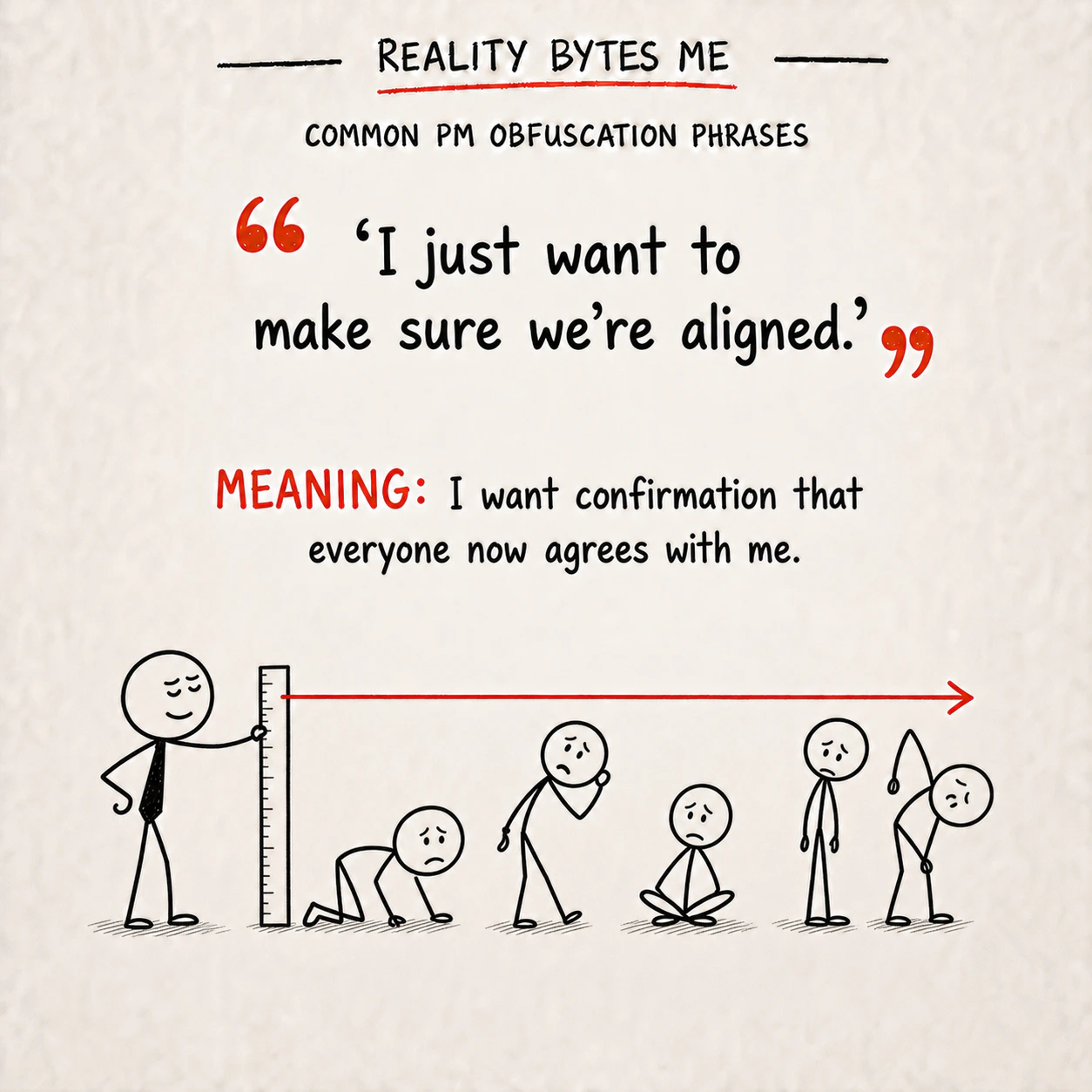
Alignment measured against one person's preferred answer.
Why this one bites
The manager supplies a ruler and a fixed red line. Everyone else must fit. What sounds like a check for shared understanding becomes a demand that the group confirm an answer already chosen by the person conducting the check.
The different poses make the cost of uniformity visible. People can agree on an objective while disagreeing about its assumptions or method, but this version of alignment leaves no room for either distinction. Agreement is being measured by resemblance to the manager's position.
Accessible summary
- A manager holds a ruler beside a horizontal red arrow. Five uncomfortable colleagues stand, crouch or bend beneath the line.
- The caption translates the alignment request into a desire for confirmation that everybody agrees with the speaker.
Reading notes
Shared direction does not require identical information or identical judgment. Engineers, support staff and commercial teams can want the same outcome while seeing different risks. Their disagreement may be precisely the information a decision needs. When alignment is measured by whether everybody repeats the preferred answer, the organization loses the benefit of having different perspectives in the room.
The ruler makes the manager's position look objective. A measurement tool normally compares something against an independent standard. Here the standard is simply where the manager has placed the line. Colleagues can satisfy it by changing their posture rather than changing the facts. The discomfort is the point: visible agreement has been purchased through accommodation, not through a better understanding of the work.
A useful alignment conversation separates the objective from the proposed method. What are we trying to achieve? Which constraints are real? Which assumptions remain contested? What decision has actually been made, and by whom? Recording disagreement alongside a decision is not necessarily disloyalty. It can preserve information needed when circumstances change. In this cartoon, however, the line has no space for that record. The group looks coordinated only after everyone has bent enough to fit beneath it.