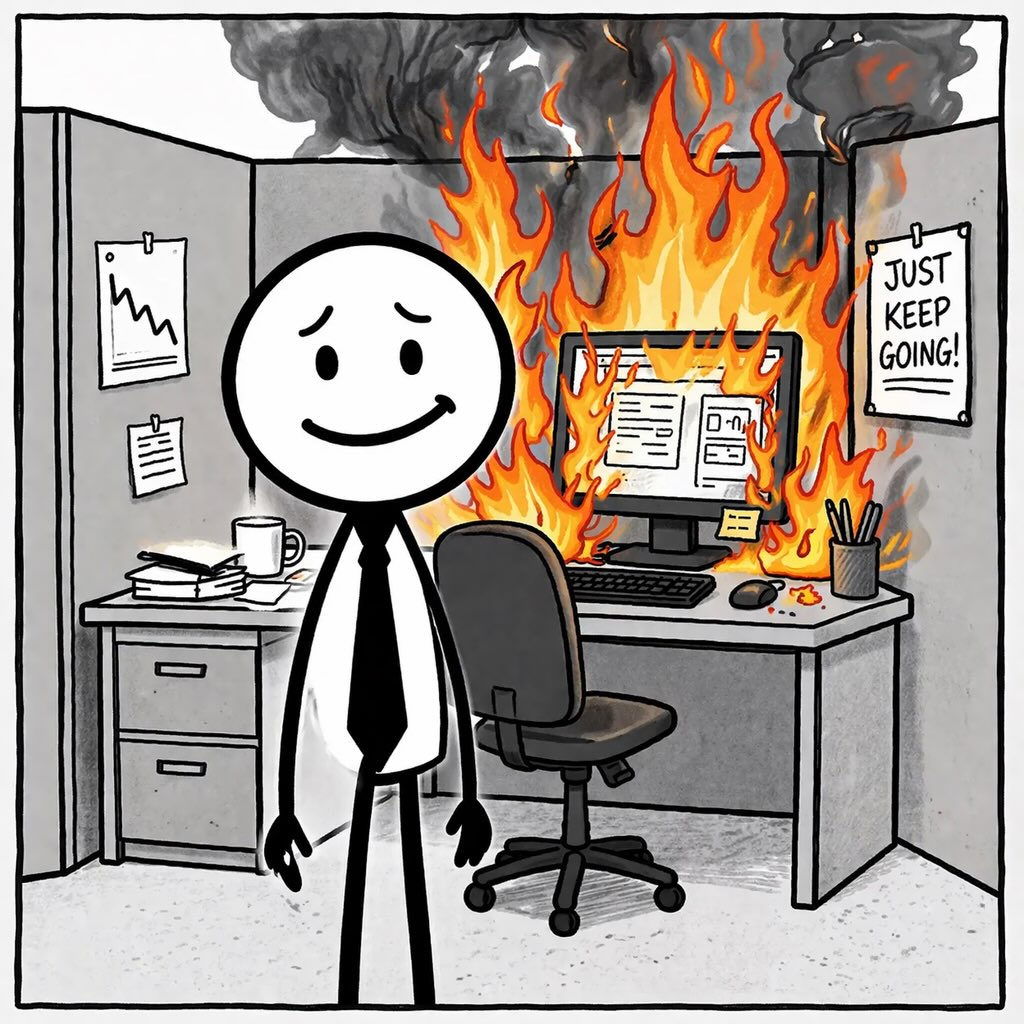
Published cartoon ·
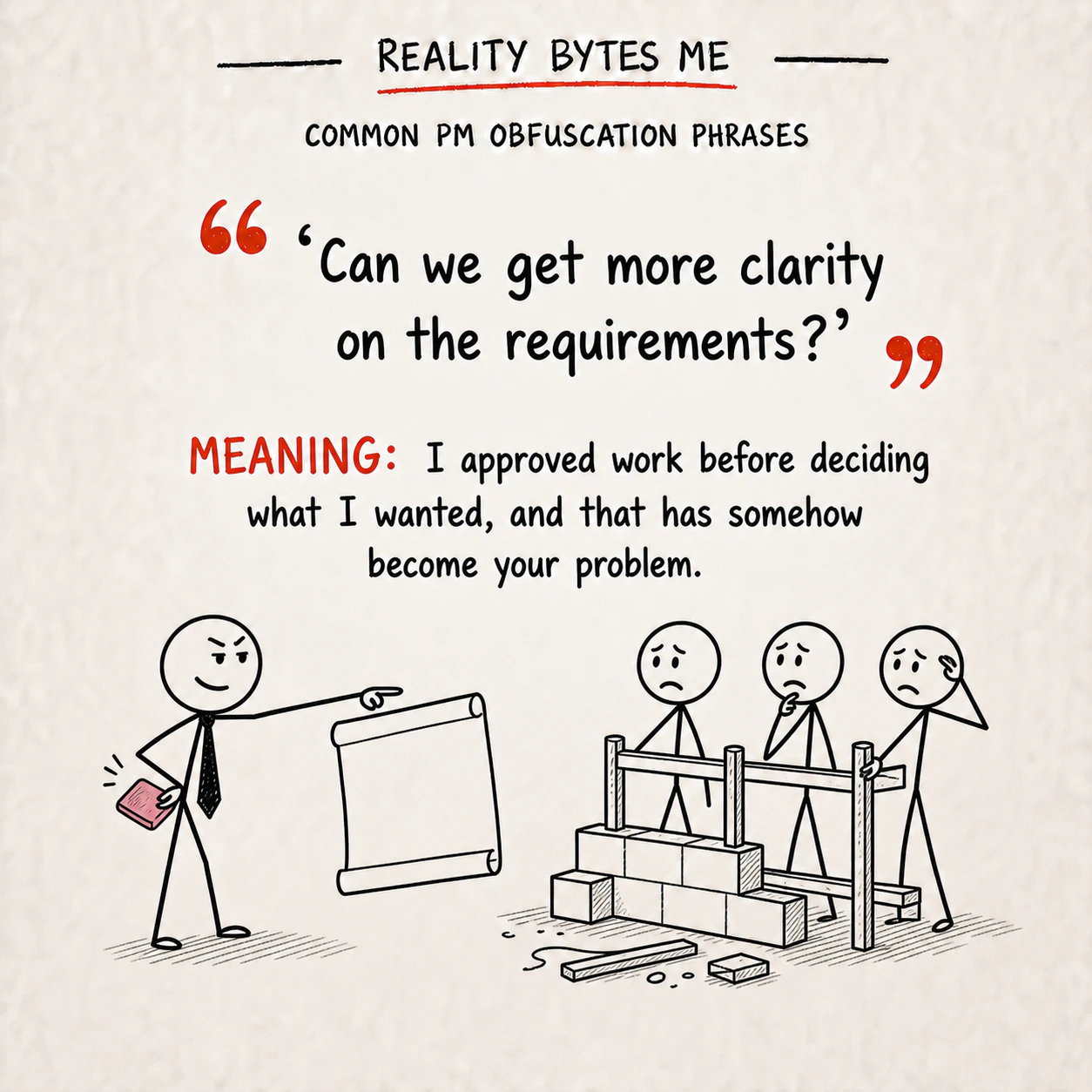
Can we get more clarity on the requirements?
The specification is blank. The work has already started.
Why this one bites
The builders have begun assembling a structure when the manager presents an empty plan. A request for clarity arrives after approval, converting an unresolved decision about what to build into a problem for the people building it.
The satire concerns timing and ownership. Asking questions is useful; pretending the answers should have materialised downstream is less so. The empty sheet makes the missing decision impossible to overlook, even as the speaker tries to return it to the team.
Accessible summary
- A manager points to a blank hanging plan while holding a small pink paper. Three worried workers stand behind a partially built structure.
- The caption says work was approved before the speaker decided what they wanted.
Reading notes
The timing changes the meaning of an otherwise reasonable question. Before construction, uncertainty is an input to planning. After approval and a start date, the same uncertainty can become evidence that the delivery team has failed to understand instructions. The blank plan refuses that convenient revision of history. There was no complete instruction waiting to be understood.
This pattern often hides several decisions inside one word: requirements. A team needs to know who will use the result, what problem it solves, which behavior counts as success and what is deliberately excluded. Different people may own those answers. Asking a builder for greater clarity cannot substitute for asking the decision-maker to choose between incompatible outcomes. A more detailed document can still leave the central choice unresolved.
The half-built structure shows why discovering the gap late is expensive. Work already exists around assumptions that may now change. People must decide what to keep, what to undo and who can authorize the new direction. None of that means development should stop until every detail is known. It means uncertainty should travel openly with the approval instead of being quietly reassigned after the work begins. The drawing turns that missing handover into a sheet everybody can see through.