Published cartoon ·
The Designated Technical Cassandra
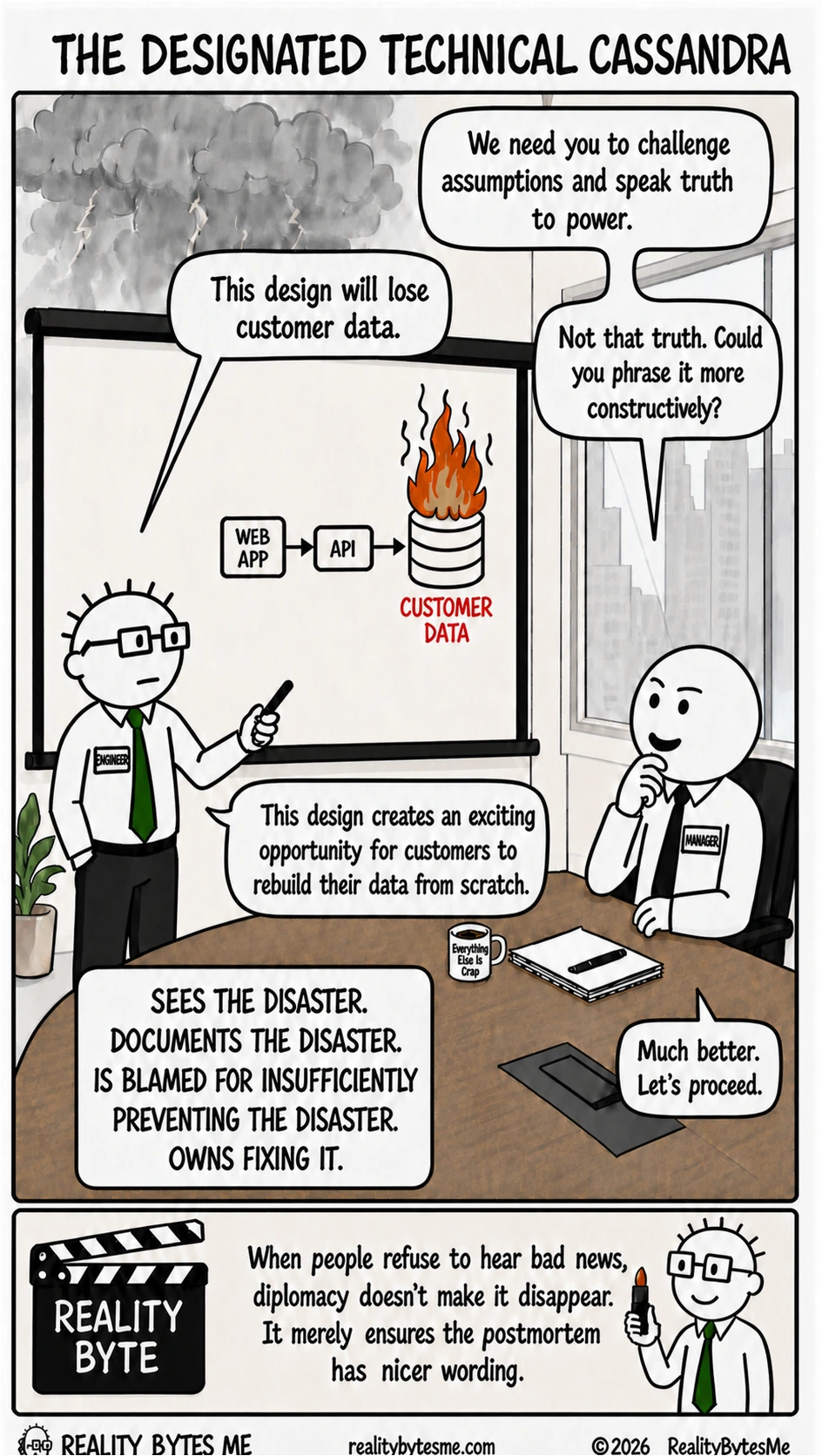
Sees the disaster, documents the disaster, gets blamed for insufficiently preventing it—and owns fixing it.
Why this one bites
Engineering sometimes means telling people what they do not want to hear in the nicest possible way. Cassandra's problem is not that the warning is unclear; it is that accepting it would interfere with a preferred decision.
The organizational ritual rewards challenge in principle and rejects the particular truth that arrives. When the predicted failure occurs, the warning becomes proof that the engineer should have prevented it more forcefully.
Accessible summary
- The manager asks the engineer to challenge assumptions. The engineer explains that the design will lose customer data.
- The answer is reframed as the wrong kind of truth. The manager closes the discussion with: Much better. Let's proceed.
- The disaster sequence ends with the engineer seeing it, documenting it, being blamed for not preventing it and owning the repair.
Reading notes
Inviting challenge is easy when the imagined challenge improves a preferred plan without threatening it. A warning about customer data is more disruptive: accepting it may require delaying the release, changing the design or acknowledging that an earlier approval was premature. The engineer's answer fails the meeting's unstated requirement that honesty remain compatible with the desired decision.
The later blame completes the contradiction. Before the failure, the engineer is expected to respect the decision. After the failure, the same person is asked why they did not overcome it. A documented warning may establish what was known, but it does not magically grant the authority that was missing at the time. The repair assignment then adds practical responsibility to the retrospective accusation.
A serious challenge process identifies who can stop or change the work and what happens when a material warning remains unresolved. It does not rely on an engineer becoming more persuasive indefinitely. The cartoon asks whether the organization wants information or merely the appearance of having consulted expertise. Cassandra's predicament is painful because the insight is technically useful. It becomes organizationally useless only when the people entitled to act on it require a more agreeable truth.